Which Tablet Is Best for You?
Finding the right tablet for your specific industry, environment and workflow can be a tough assignment. Check out this interactive solution brief that shows you how Zebra's tough tablets can be tailored to your business needs, and how you can empower your team to perform at their highest levels with a device that is perfectly customized for their specific needs.
What does a 406 Not Acceptable error mean?
A 406 Not Acceptable error is an HTTP response status code that tells you: “The server has content, but none of it matches what you said you’re willing to accept.”
When a client (like a browser or API consumer) sends a request, it can include headers such as:
- `Accept` (preferred media types, e.g., `application/json`, `text/html`)
- `Accept-Language` (preferred languages, e.g., `en-US`, `fr-FR`)
- `Accept-Charset` (preferred character sets, e.g., `utf-8`)
- `Accept-Encoding` (preferred encodings, e.g., `gzip`)
If the server can’t produce a response that fits any of those preferences, it responds with **HTTP 406 Not Acceptable** instead of returning content that doesn’t match the client’s criteria.
In short, the 406 code is about **content negotiation**: the client has been specific about what it wants, and the server can’t match those requirements with the representations it has available.
Why am I seeing a 406 Not Acceptable on my site or API?
You typically see a 406 Not Acceptable error when there’s a mismatch between what the client asks for and what your server is prepared to deliver. Common causes include:
1. **Overly strict Accept headers**
The client might send something like:
- `Accept: application/json` to an endpoint that only returns `text/html`, or
- `Accept-Language: de-DE` when your content is only available in `en-US`.
2. **Limited content formats on the server**
Your application may only support one or two media types (for example, HTML pages only), while the client expects JSON, XML, or a specific encoding.
3. **Misconfigured API clients or SDKs**
A library or integration may set default `Accept` headers that don’t match your API’s actual responses.
4. **Strict proxies or security layers**
Some gateways, WAFs, or proxies enforce content negotiation rules and can surface 406 errors when they don’t find an acceptable representation.
In each case, the core issue is the same: the **requested representation (type, language, charset, or encoding) doesn’t line up with what your server can provide**.
How can I fix or prevent 406 Not Acceptable errors?
You can address 406 Not Acceptable errors by adjusting either the **client’s expectations** or the **server’s capabilities**.
Here are practical steps:
1. **Relax or correct the client’s Accept headers**
- Allow multiple media types, for example:
`Accept: application/json, text/html;q=0.8, */*;q=0.5`
- If you control the client, remove overly narrow headers or add fallbacks.
2. **Align server responses with common formats**
- Ensure your endpoints return media types that match what your clients request (e.g., `application/json` for APIs).
- Set accurate `Content-Type` headers so clients can correctly interpret responses.
3. **Implement content negotiation logic**
- On the server, inspect `Accept`, `Accept-Language`, and related headers.
- Choose the best available representation (for example, default to `en` if `en-US` is not available).
- Provide sensible defaults when the client’s preferences are too specific.
4. **Update documentation and client guidelines**
- Document which media types, languages, and encodings your API or site supports.
- Offer sample requests that show recommended `Accept` headers.
5. **Monitor and log 406 responses**
- Log the incoming `Accept*` headers whenever a 406 occurs.
- Use this data to spot patterns and decide where to broaden support or adjust client expectations.
By rethinking how your application handles content negotiation—on both the client and server side—you can significantly reduce 406 Not Acceptable responses and create a smoother experience for users and integrations.
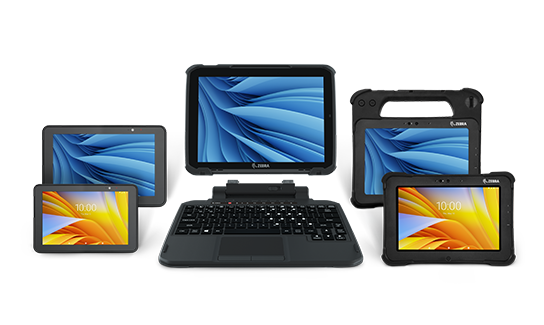
Which Tablet Is Best for You?
published by iT1 Source
iT1 is a global technology solution provider, established in 2003, and headquartered in Tempe, AZ. Our core capabilities include, virtualization, data management, communications, networking, professional and managed services and corporate procurement. iT1 works closely with industry leading manufacturers including Hewlett Packard Enterprise, HP Inc., Cisco, Dell Technologies/EMC, Lenovo, VMware, Citrix and Microsoft, and many others. The company serves over 3,000 active accounts in virtually every industry including healthcare, finance, retail and manufacturing, as well as Federal, state, local and education (SLED) agencies.
Our mission is to provide value-driven services in the design and implementation of customized technology solutions for our clients, allowing them to achieve their stated business goals. We strive to build long-term client relationships based on expertise, excellence in service and the highest ethical standards.
.png "iT1 Source")



 Sign in with LinkedIn